ASCE 41-23 · Tiered Evaluation

Seismic Evaluations for California Buildings — Tier 1 through Tier 3.

PE-stamped seismic evaluations performed to ASCE 41-23, scoped to your specific decision: refinance, acquisition, retrofit prioritization, or ordinance compliance. Engineer-led, with judgment, not just numbers.

The Three Tiers

Right-sized analysis for the decision in front of you.

ASCE 41-23 defines three tiered procedures. We help you choose the one that answers your question — without over-engineering the diligence package.

01 · Tier 1
Screening

Tier 1 — Screening Evaluation

Checklist-based screening to identify deficiencies and benchmark the building against expected performance objectives. Fast, economical, and often sufficient for refinance triage or portfolio prioritization.

02 · Tier 2
Deficiency-Based

Tier 2 — Deficiency-Based Evaluation

Targeted linear analysis of deficiencies identified in Tier 1. Quantitative answers on specific concerns without the cost of a full nonlinear analysis. The common landing spot for most Bay Area diligence.

03 · Tier 3
Systematic

Tier 3 — Systematic Evaluation

Full systematic evaluation, including nonlinear procedures when warranted. Used when stakes (life safety, asset value, code path) justify the deeper analysis — or when Tier 1/2 results trigger it.

When You Need One

Decisions that drive a seismic evaluation.

Most evaluations land on our desk through a few specific pressures. We adapt the deliverable to the audience reading it.

Use Case 01

Refinance & Acquisition

Fannie Mae / Freddie Mac DUS and most CMBS securitizations require seismic evaluation in California. We write to the form the lender expects.

Use Case 02

Retrofit Ordinance Compliance

Soft-story, URM, and non-ductile concrete ordinances across California require evaluation as the first step toward compliant retrofit design.

Use Case 03

Insurance & PML

Probable Maximum Loss studies and carrier-required evaluations. Our reports cross-reference ASTM E2026 SRA where appropriate.

Use Case 04

Owner Risk Decisions

When an owner simply wants to know what they own. We translate engineering into plain language for boards and asset managers.

Process

Five stages, plainly priced.

Every evaluation runs through the same engineering desk so quality, methodology, and judgment stay consistent across your portfolio.

  1. 01

    Kickoff & Scope Definition

    Confirm the decision the evaluation needs to answer, the tier required, and assemble existing drawings. Fee estimate within one business day.

  2. 02

    Site Walk & Data Collection

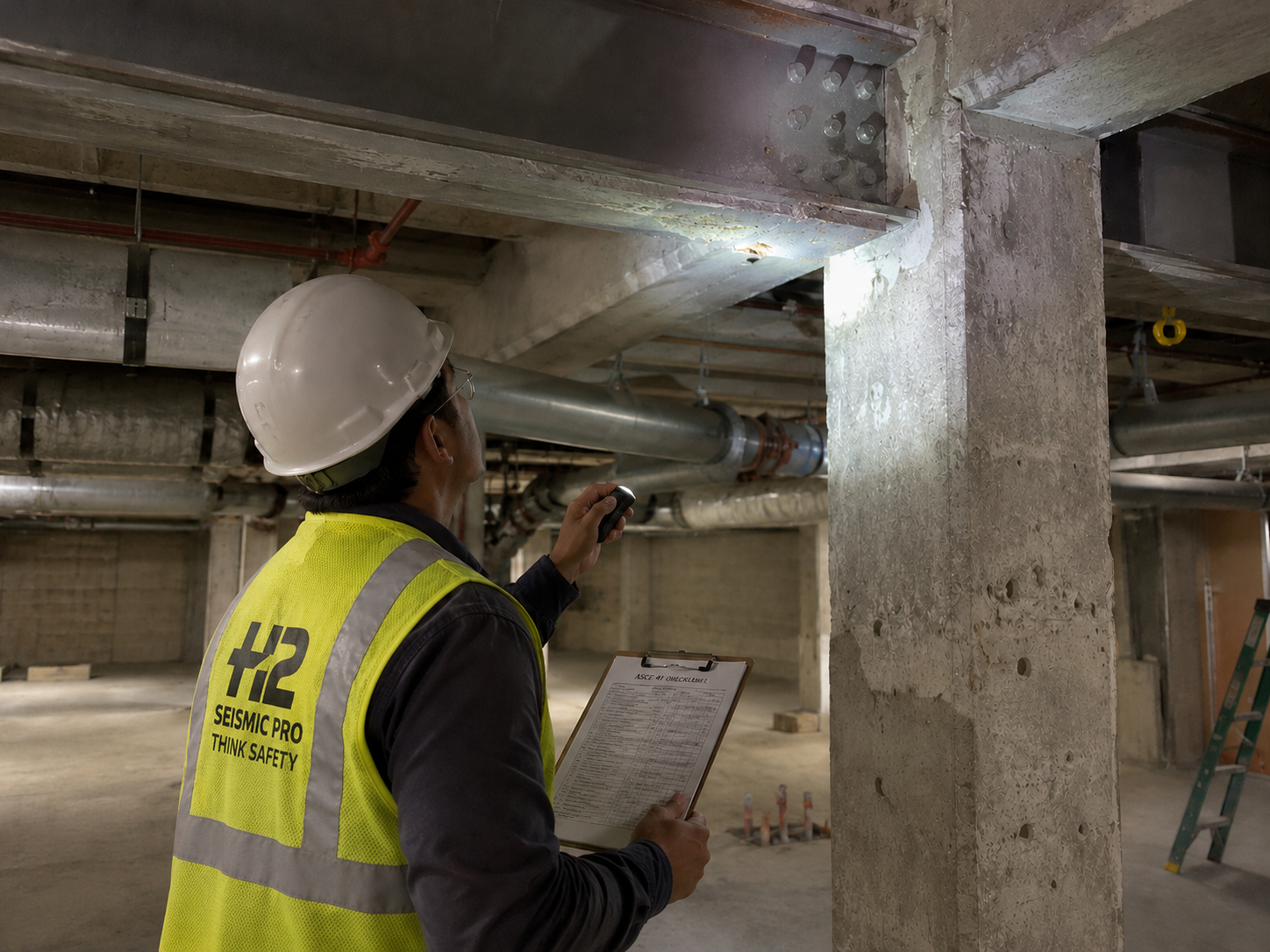
    On-site walkthrough by a licensed PE. Note as-built conditions, deficiencies, irregularities. Photo documentation throughout.

  3. 03

    Analysis & Engineering Judgment

    ASCE 41-23 procedures appropriate to the tier. Where computation meets judgment, the engineer of record makes the call — and shows the work.

  4. 04

    PE-Stamped Report

    Findings, performance objectives, deficiencies, retrofit recommendations (if applicable), and an executive summary readable by a non-engineer audience.

  5. 05

    Stakeholder Presentation

    Optional but recommended: a session with your board, lender, or asset team to walk through the findings and answer questions in real time.

FAQ

Common questions.

How do I know which tier I need?

For most refinance and prioritization needs, Tier 1 or Tier 2 is appropriate. Tier 3 is reserved for buildings where deeper analysis materially changes the decision — large or critical assets, or where Tier 1/2 results were ambiguous. We help you choose during the consultation.

How long does an ASCE 41 evaluation take?

Tier 1: typically 2–4 weeks from kickoff to stamped report. Tier 2: 4–8 weeks. Tier 3: 8–16 weeks depending on building complexity. Expedited delivery is available when a transaction is closing.

What documents do you need from us?

Existing structural and architectural drawings (any vintage), prior reports, any known retrofit history, and access for site walkthrough. If drawings are missing, we can perform measured documentation as a sub-scope.

How does this interact with SB-326 / SB-721 EEE inspections?

EEE findings often surface deficiencies that warrant a broader seismic look. Conversely, a Tier 1 or Tier 2 evaluation will often flag elevated elements as a follow-up scope. Performing both with the same firm closes that loop without re-scoping.

Will my lender accept your report?

Yes. Reports are PE-stamped and structured to mirror the format Fannie/Freddie DUS and the major CMBS underwriters expect. If your lender has a specific template, share it during scoping and we'll align.

Do you also design the retrofit?

Yes. When evaluations identify retrofit needs, we produce PE-stamped retrofit drawings and specifications. See Seismic Retrofitting for that scope.

Get in Touch

We’re here to answer questions or start your project — send us your details today.

Free 15-minute consultation, no obligation. You’ll get a written scope and fee estimate from a licensed California PE within one business day.

Office
Dublin, CA 94568
Hours
Mon–Fri · 8:00am–5:00pm PT
Response
Within one business day

By sending this you’ll receive a written scope and fee estimate within one business day. We don’t share your details.